The paint by numbers market has exploded. Five years ago, you had a handful of brands selling generic kits with questionable paint quality. In 2026, there are hundreds of options, and the gap between the best and worst kits is enormous.
I run customer happiness at BestPaintByNumbers. We have shipped over 53,000 kits to 87 countries. I have read every review, answered every email, and seen every finished painting that customers send us. I know what makes people love this hobby, and I know what makes them quit after one frustrating session.
This is not a generic "top 10" list pulled from Amazon reviews. This is what actually matters when you are choosing a kit, based on thousands of real experiences.
What Separates a Great Kit From a Bad One
Before we talk about specific options, you need to understand the five things that determine whether your painting experience is wonderful or miserable. These are not marketing features. They are the factors that show up in every complaint and every rave review.
Paint quality. This is the single biggest differentiator. Cheap kits use thin, watery acrylics that require three or four coats to cover the printed numbers underneath. Good kits use properly pigmented paints that cover in one coat (two for very light colors like white and pale yellow, which is normal). The paint should flow smoothly off the brush without dragging or clumping. If you have ever used a kit where the paint felt like trying to spread dried toothpaste, you had a bad kit.
Color matching. This is where custom kits live or die. A system that converts your photo into 24, 36, or 48 colors needs an algorithm that chooses the right palette. Poor color matching produces flat, lifeless results where skin looks orange and skies look purple. Good color matching captures subtle gradients and tonal shifts that make the finished painting recognizable and emotionally resonant.
Canvas quality. You want a canvas with clearly printed numbers that do not smudge when you paint over them. The canvas should be taut and flat, not wrinkled or warped. Pre-stretched canvas on a wooden frame is the gold standard. Rolled canvas that you have to stretch yourself is acceptable but annoying. Thin paper "canvas" is a dealbreaker.
Number readability. This sounds minor until you are squinting at the difference between a 14 and a 16 at 11pm. Good kits use clear, consistent fonts with enough contrast against the canvas. Tiny sections should still have legible numbers. If the numbers blur together, you will make mistakes and the whole experience becomes frustrating instead of relaxing.
Paint quantity. You need enough paint to finish the canvas with some margin. Running out of a color on section 347 of 350 is infuriating, and cheap kits are notorious for short-filling pots. Quality kits include 10 to 20 percent extra paint per color, so even if you apply thicker in some areas or need a second coat on lights, you are covered.
The Three Types of Paint by Numbers Kits
Not all kits serve the same purpose. Understanding what you actually want determines which type is right for you.
Custom Photo Kits
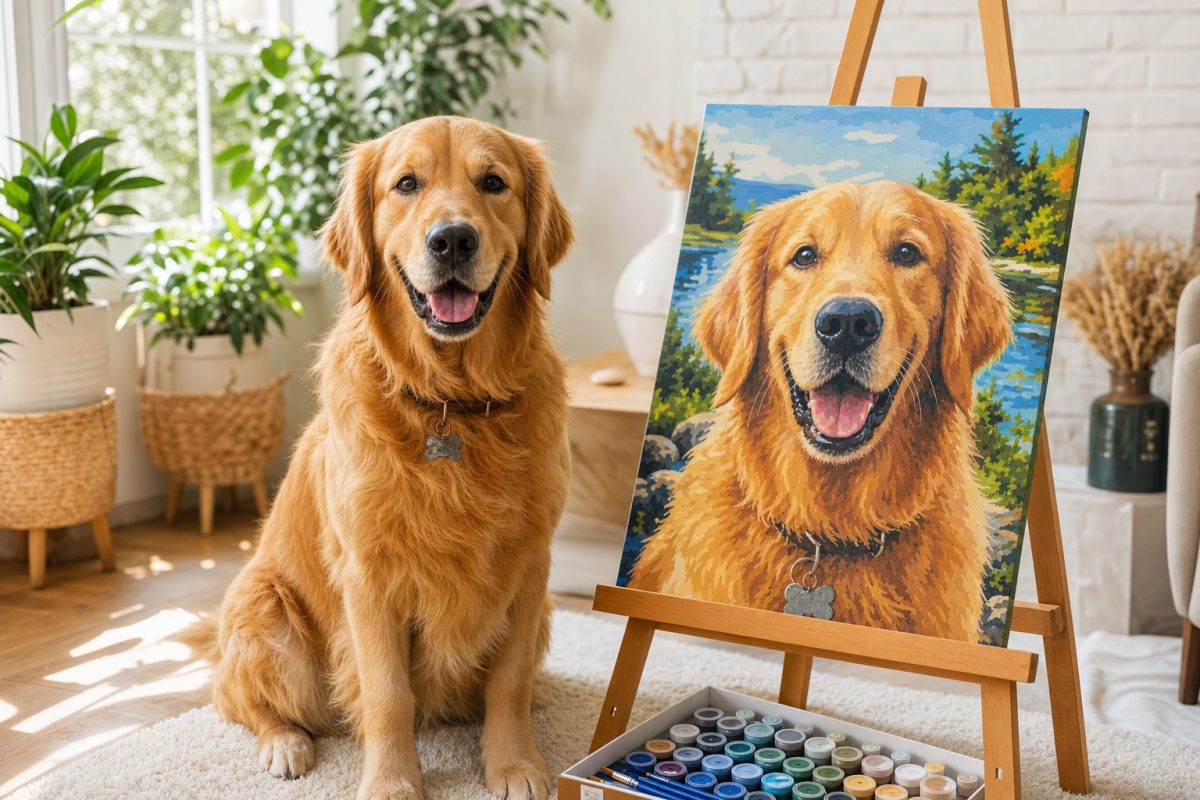
You upload your own photo and the system converts it into a paint-by-numbers template. This is the most personal option and produces the most emotionally meaningful result. Your pet, your wedding photo, your grandmother, your favorite vacation... the finished painting is something no one else in the world has.
What to look for: color count options (24 is great for beginners, 36 for intermediate, 48 for detail lovers), the quality of the conversion algorithm, and whether the company lets you preview the template before committing. Canvas size matters too. 40x50cm (roughly 16x20 inches) is the sweet spot for most photos.
Pre-Designed Kits
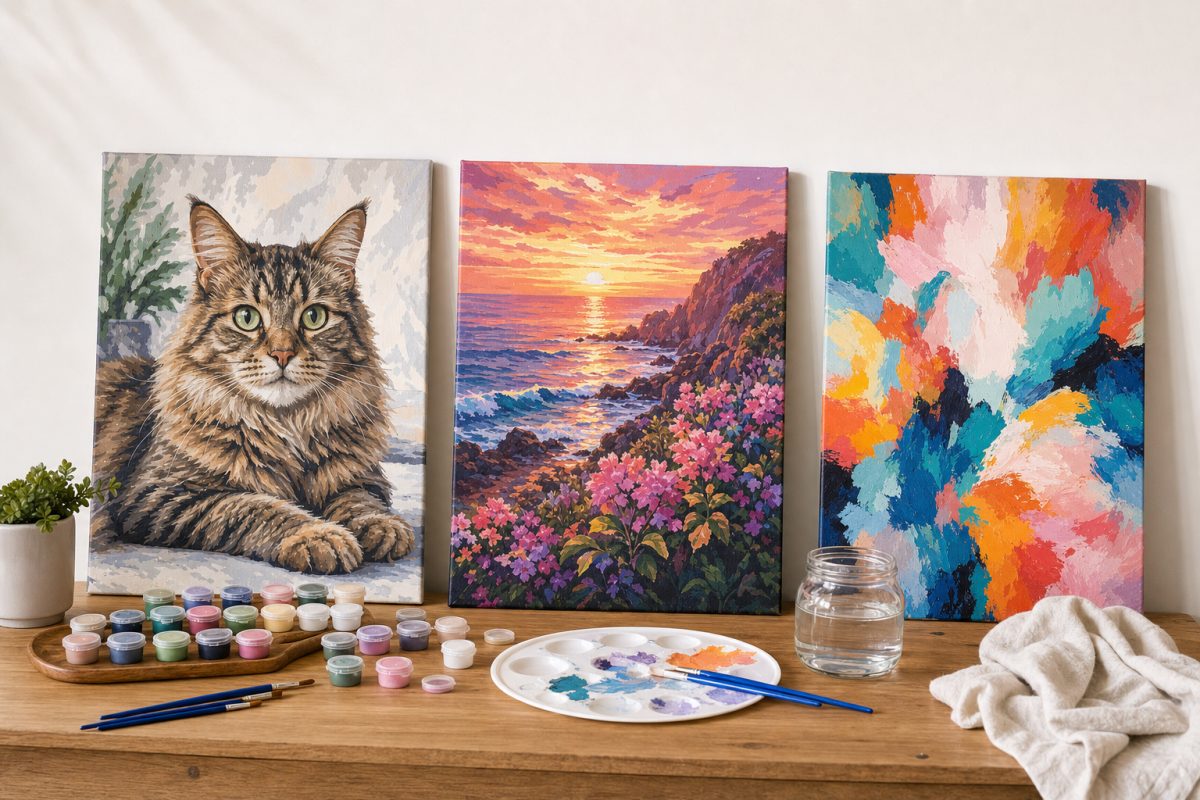
Professional designs created by artists. Landscapes, animals, abstracts, florals, cityscapes. The advantage is that these designs are optimized for the medium. An artist who understands paint by numbers creates compositions that look spectacular when painted section by section. The color palettes are deliberate. The level of detail is calibrated to be challenging but not overwhelming.
These are great if you want to paint but do not have a specific photo in mind, or if you want to build your skills before tackling a personal photo. They also make excellent gifts when you do not have access to the recipient's photos.
AI Art Kits (ColorPop)
This is the newest category, and it is genuinely exciting. You upload a photo and AI transforms it into a bold, artistic interpretation before converting it to a paint-by-numbers template. The result is not a literal reproduction of your photo. It is your photo reimagined as pop art, impressionism, or abstract expressionism.
ColorPop kits produce paintings that look like they belong in a gallery. They are conversation starters. Visitors see the painting and say "where did you get that?" and you get to say "that is actually my dog, and I painted it myself." The AI handles the artistic vision. You handle the brushwork.
What We Recommend (and Why)
If this is your first kit, start with a custom photo kit at 24 colors. The sections are larger, the number of paints is manageable, and the emotional connection to your own photo will carry you through the learning curve. The finished result at 24 colors still looks impressive. You are not sacrificing quality. You are optimizing for a great first experience.
If you have done one or two kits and want more detail, go to 36 colors. The jump from 24 to 36 is noticeable. Skin tones become more nuanced. Landscapes gain depth. Fur texture becomes visible. This is where most repeat customers settle.
If you are experienced or want the maximum detail, 48 colors is the premium experience. The sections are smaller, the painting takes longer, and the finished result has a richness that people genuinely mistake for hand-painted art. Pet portraits and detailed landscapes shine at 48 colors.
The framed option is worth the upgrade if you plan to hang the painting. It saves you the cost and hassle of custom framing, which typically runs $40 to $80 at a frame shop. The frame arrives with the kit, and the canvas is pre-mounted, so when you finish painting you can hang it immediately.
Things to Avoid
After years of reading customer stories from people who tried other brands first, here are the red flags.
Kits under $15. The math does not work. Quality acrylic paints, a proper canvas, and good brushes cost money to produce. At $15 retail, something was cut. Usually it is the paint quality, and that ruins the entire experience.
No preview option. If a company takes your photo and ships a kit without letting you see how the conversion looks, you are gambling. Some photos do not convert well (more on that in our photo selection guide). A good company lets you see what you are getting before you commit.
"One size fits all" kits. Reputable brands offer multiple canvas sizes and color counts because different photos need different treatments. A simple pet portrait works beautifully at 24 colors. A complex group photo needs 36 or 48. A company that offers only one option is not thinking about your result.
No customer support. Things happen. A paint pot dries out. You spill a color. A section confuses you. Good brands (including us) have real people who answer real emails and solve real problems. Our 4.95 out of 5 rating from 53,596 reviews exists largely because we do not disappear after the sale.
The Bottom Line
The best paint by numbers kit is the one that makes you forget you are painting by numbers. Where the paint flows right, the colors are true, the numbers are clear, and you lose yourself in the process. Where you sit down for twenty minutes and look up to find two hours have passed. Where the finished painting makes people say "wait, you made that?"
That experience is available at every price point and every skill level. You just need to choose the right kit for what you want to paint, and avoid the traps that turn a beautiful hobby into a frustrating one.
53,000 people have found that experience with us. If you want to be next, start with your favorite photo. The one that makes you feel something. That is always the right first kit.